
Spring Plumbing Checklist: 7 Things Every Homeowner Should Inspect After Winter
By Magic Flow Plumbing | Serving Lake Stevens, Bellevue, Kirkland & the Greater Seattle, WA Area
Winter in the Greater Seattle, WA region is no joke. Between freezing overnight temperatures, weeks of relentless rain, and the occasional hard freeze that catches homeowners off guard, your plumbing system takes a serious beating from November through March. The sneaky part? Most of the damage doesn’t announce itself right away. A small crack in a pipe, a worn-out water heater seal, or a silently clogged drain can sit quietly through the coldest months — and then burst into an expensive, stressful problem right when you’re trying to enjoy spring.
At Magic Flow Plumbing, we’ve seen it happen time and time again across Lake Stevens, Bellevue, Kirkland, and throughout the greater Seattle area. That’s why every spring, we encourage every homeowner to walk through this simple 7-point inspection checklist. Some items you can handle yourself. Others are a clear signal to pick up the phone and call a licensed plumber before a small issue becomes a major repair.
1. Check All Exposed Pipes for Cracks or Bulging
Start with the pipes you can actually see — under sinks, in the garage, in the crawl space, or along exterior walls. During a hard freeze, water expands inside pipes. Even if a pipe didn’t burst outright during winter, it may have developed a hairline crack or a slight bulge that’s one warm day away from failure.
What to look for: Discoloration, moisture, white mineral deposits around joints, or any visible deformation in the pipe material.
When to call a plumber: If you spot any cracking, unusual bowing, or wet spots near pipe connections — don’t wait. A stressed pipe can fail suddenly and flood your home within minutes.
2. Test Every Faucet and Outdoor Spigot
Turn on each faucet in your home, including the ones you rarely use. Low pressure or a sputtering flow can indicate a partial blockage or a pipe that partially froze and narrowed internally. Pay special attention to outdoor hose bibs and spigots — these are the most exposed to freezing temps and the most commonly damaged.
What to look for: Reduced water pressure, discolored water (especially on first use), water that takes unusually long to run clear, or dripping when the faucet is fully closed.
When to call a plumber: Persistent low pressure throughout the house, or any outdoor spigot that drips even when shut off, suggests internal damage that needs professional assessment.
3. Inspect Your Water Heater
Your water heater worked overtime all winter keeping up with hot water demand. Spring is the perfect time to give it a thorough look-over. Sediment buildup — accelerated by cold water flowing in during winter — reduces efficiency and can shorten the life of the unit significantly.
What to look for: Rust-colored water, a popping or rumbling sound when the heater runs, water pooling near the base, or a unit that’s more than 10 years old struggling to keep up with demand.
When to call a plumber: Any visible leaking, rust in your hot water, or a unit that’s not maintaining temperature consistently. Homeowners in the Lake Stevens and Kirkland areas with older units may be overdue for a flush or a full replacement.
4. Inspect Toilets for Hidden Leaks
A running toilet can waste hundreds of gallons of water per day — and you might not even hear it. The classic “silent leak” happens when the flapper valve wears out and water seeps continuously from the tank to the bowl.
What to look for: Drop a few drops of food coloring into the toilet tank. Wait 15 minutes without flushing. If color appears in the bowl, you have a leak. Also check for any wobbling at the base, which can indicate a failing wax ring seal.
When to call a plumber: A wobbling toilet or water damage around the base of the toilet requires prompt attention — a failed wax ring can lead to subfloor damage and mold growth.
5. Check Under-Sink Cabinets and Around Appliances
Open every cabinet under your kitchen and bathroom sinks. Look at the back walls and the bottom of the cabinet floor. Also pull out your dishwasher slightly and look at the supply and drain connections. Small, slow leaks under sinks often go unnoticed for months until the cabinet floor is rotted through.
What to look for: Staining, soft spots in the cabinet floor, warped wood, or any musty odor that signals moisture accumulation.
When to call a plumber: Any active dripping, soft flooring material, or signs of mold. In the Greater Seattle, WA climate, moisture gets trapped easily — early intervention prevents major structural damage.
6. Test Your Sump Pump (If You Have One)
Homes in low-lying areas around Lake Stevens, Bellevue, and other parts of King and Snohomish County often have sump pumps to manage groundwater. After a wet winter, your sump pump has likely been working hard — and spring brings more rain, not less.
What to look for: Pour a bucket of water slowly into the sump pit and watch whether the pump activates and drains the pit promptly. Listen for unusual grinding or rattling sounds while it runs.
When to call a plumber: If the pump doesn’t activate, runs continuously, or makes grinding noises, it may need repair or replacement. A failed sump pump during a Pacific Northwest spring rain is a basement flood waiting to happen.
7. Examine Your Main Shutoff Valve
This one is easy to overlook because you rarely touch it — but knowing your main water shutoff valve works properly is critical in any plumbing emergency. A valve that hasn’t been turned in years can seize or fail to fully close when you need it most.
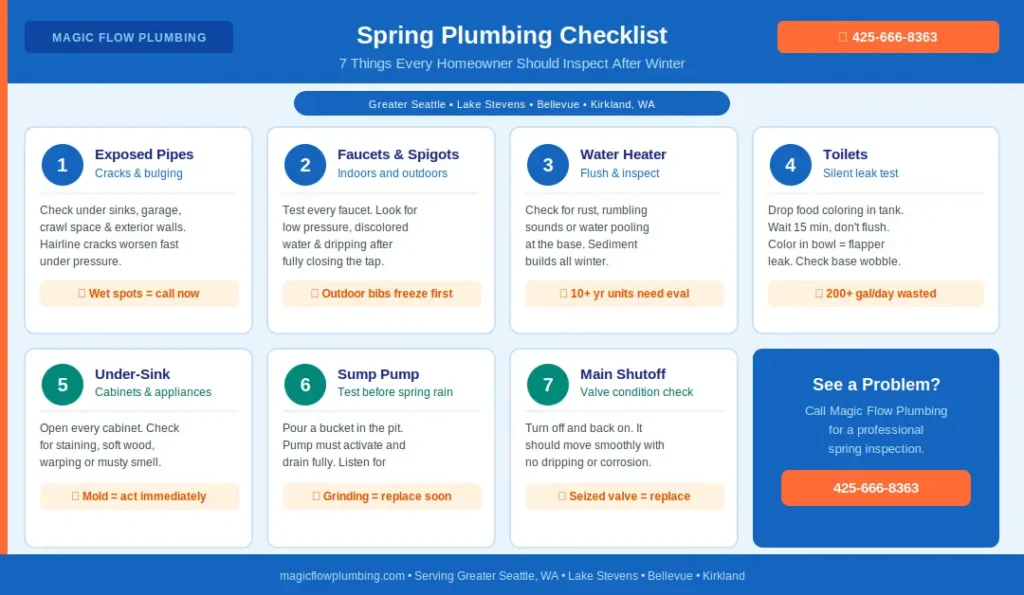
What to look for: Turn the valve off and back on. It should move smoothly. Check for any dripping or corrosion around the valve body itself.
When to call a plumber: A valve that’s hard to turn, one that doesn’t fully stop water flow, or one showing corrosion should be replaced before an emergency forces the issue. This is also a great time to make sure every member of your household knows where the main shutoff is located.
Don’t Wait Until There’s a Problem
The homeowners who call us in a panic are almost never dealing with brand-new issues — they’re dealing with winter damage that quietly compounded over months. A spring inspection takes less than an hour and can save you thousands of dollars in water damage repair, emergency plumbing calls, and higher utility bills.
At Magic Flow Plumbing, we serve homeowners across Lake Stevens, Bellevue, Kirkland, and the broader Greater Seattle, WA region with honest, reliable plumbing inspections and repairs. Whether you want a professional eye on your system or you’ve already spotted something on this checklist that concerns you, our team is ready to help.
📞 Call Magic Flow Plumbing today to schedule your spring plumbing inspection.
Phone: 425-666-8363
Don’t let last winter’s damage become this summer’s emergency.